
The Rise of New Car Safety Technology
New Car Safety Technology
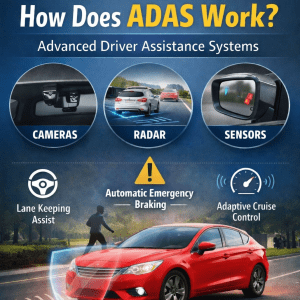
Over the last 20 years, new car safety technology has evolved from simple mechanical systems to intelligent vehicles equipped with radar, cameras, lasers, and artificial intelligence.
Modern vehicles don’t just protect you during a crash — they actively work to prevent one.
These systems are collectively known as Advanced Driver Assistance Systems (ADAS). Many of these features are now standard equipment in new vehicles — but that wasn’t always the case.
Let’s break down the major safety technologies, how they work, and exactly when they became required or widely standard in new vehicles.
Anti-Lock Braking System (ABS)
What It Does:
Prevents wheels from locking during hard braking, allowing drivers to maintain steering control.
When It Became Standard:
• Introduced in passenger vehicles in the 1970s
• Widely adopted in the 1990s
• Nearly universal standard by the early 2000s
ABS laid the groundwork for electronic vehicle safety systems.
Electronic Stability Control (ESC)
What It Does:
Uses wheel sensors and onboard computers to detect skidding and automatically apply brakes to specific wheels to keep the car stable.
When It Became Standard:
• Required on all new passenger vehicles in the U.S. starting September 1, 2011
This was one of the biggest mandated safety upgrades in modern automotive history.
Backup Cameras
What It Does:
Displays a live rear view when reversing to prevent back-over accidents.
When It Became Standard:
• Required on all new vehicles in the U.S. beginning May 1, 2018
Today, virtually every new car includes a backup camera.
Forward Collision Warning & Automatic Emergency Braking (AEB)
What It Does:
Uses radar, cameras, or lasers to detect potential front-end collisions and either alert the driver or apply the brakes automatically.
When It Became Standard:
• Widely adopted by automakers between 2017–2022
• Federal requirement beginning September 2029 (U.S.)
AEB is one of the most important new car safety technologies for preventing serious crashes.
Adaptive Cruise Control (Radar-Based)
What It Does:
Uses forward-facing radar sensors to maintain a safe following distance automatically.
When It Became Standard:
• First introduced in the late 1990s
• Became common in luxury vehicles in early 2000s
• Widely available across most new vehicles by the early 2020s
Radar was one of the first major sensor breakthroughs in vehicle automation.
Lane Departure Warning & Lane Keep Assist
What It Does:
Uses cameras to monitor lane markings and:
• Warn you if you drift
• Gently steer you back into your lane
When It Became Standard:
• Introduced early 2010s
• Became standard on many models between 2018–2023
Lane-keeping technology is now included in most new vehicle base trims.
Blind Spot Monitoring (Radar Sensors)
What It Does:
Detects vehicles in adjacent lanes and alerts you before lane changes.
When It Became Standard:
• Gained popularity mid-2010s
• Became widely standard between 2019–2024
Blind-spot monitoring significantly reduces side-impact collisions.
Driver Drowsiness & Attention Monitoring
What It Does:
Monitors steering patterns or uses interior cameras to detect:
• Eye movement
• Head position
• Fatigue behavior
It alerts drivers showing signs of drowsiness or distraction.
When It Became Standard:
• Began appearing in the late 2010s
• Increasingly standard in higher trims 2021–2025
• Required on new models in the European Union starting 2026
This technology specifically targets fatigue-related crashes.
Laser & Lidar Technology
What It Does:
Uses laser pulses to create a 3D map of surroundings. Common in advanced autonomous systems.
When It Became Standard:
• Currently not standard on most mainstream vehicles
• Emerging in select high-end models in the 2020s
Lidar represents the next evolution in new car safety technology.
Why This Matters: Technology That Prevents Crashes Before They Happen
Most accidents are caused by:
• Distraction
• Drowsiness
• Following too closely
• Lane drifting
• Poor visibility
New car safety technology addresses these issues directly — often intervening before the driver even reacts.
Instead of simply protecting passengers during impact, today’s vehicles are engineered to prevent the crash entirely.
Timeline of When New Car Safety Technology Became Standard
| Technology | Year Standardized (U.S.) |
|---|---|
| ABS | Early 2000s (widely standard) |
| Electronic Stability Control | 2011 (required) |
| Backup Cameras | 2018 (required) |
| Automatic Emergency Braking | 2029 (required) |
| Lane Keep Assist | 2018–2023 (widely standard) |
| Blind Spot Monitoring | 2019–2024 (widely standard) |
| Driver Monitoring Systems | 2021–2025 (expanding) |
| Lidar | Emerging |
The Future of New Car Safety Technology
We are entering an era where:
• Cars steer themselves on highways
• Vehicles monitor your alertness
• AI predicts collision risk
• Laser mapping enhances precision detection
The shift from reactive safety to proactive prevention is already happening.
And as these technologies become mandatory, the road will become safer for everyone.
Final Thoughts
New car safety technology has moved from optional luxury features to federally required life-saving systems.
Radar, cameras, lasers, and AI are no longer futuristic concepts — they’re protecting drivers every day.
If you’re shopping for a new vehicle, understanding when these systems became standard can help you make an informed decision — and potentially save lives.