
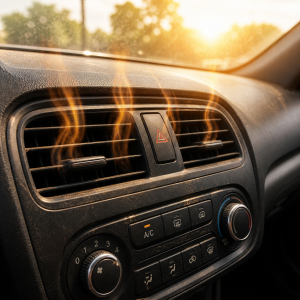
 Car AC Not Working? When your car AC stops working—especially during a Minnesota summer—it’s more than just uncomfortable. It’s often a warning sign that something in your system is failing, and waiting too long can turn a simple fix into a costly repair.
At Gappa Automotive, AC issues are one of the most common problems we diagnose once temperatures start climbing. If your AC is blowing warm air, making unusual noises, or not working at all, understanding the cause is the first step toward fixing it.
How Your Car’s AC System Works (Quick Overview)
Before diving into the problems, it helps to understand what’s happening behind the scenes.
Your vehicle’s AC system works by:
- Compressing refrigerant
- Circulating it through the system
- Removing heat from the cabin air
- Releasing that heat outside the vehicle
The key components include the compressor, condenser, evaporator, and expansion valve. If any one of these parts fails, your AC performance drops quickly.
Car AC Not Working? Here Are Some Common Reasons Why
1. Low Refrigerant (Most Common Issue)
Refrigerant is the lifeblood of your AC system. If it’s low, cooling performance drops almost immediately—and that usually means there’s a leak.
Common signs include:
- Air starts cool, then becomes warm
- AC struggles on hot or humid days
- A faint hissing sound under the hood
- Oily residue near AC components
A recharge may temporarily restore cooling, but without fixing the leak, the problem will return.
2. Compressor Failure
The compressor is responsible for pressurizing refrigerant and moving it through the system. When it fails, the AC system can’t function at all.
Watch for:
- Clicking, grinding, or squealing noises
- AC clutch not engaging
- No change in temperature when AC is turned on
Compressor issues can be caused by age, lack of lubrication, or running the system with low refrigerant.
3. Electrical Problems
Today’s vehicles rely heavily on electronics to control the AC system. A failed sensor, blown fuse, or faulty relay can shut the system down.
Symptoms may include:
- AC works intermittently
- System won’t turn on at all
- Blower operates, but no cooling occurs
Electrical issues can be tricky to pinpoint without proper diagnostic tools.
4. Clogged or Dirty Cabin Air Filter
A restricted cabin air filter can limit airflow and make it feel like your AC isn’t working—even if the system itself is fine.
Typical signs:
- Weak airflow from vents
- Musty or stale smell
- Reduced cooling efficiency
This is one of the simplest and most affordable fixes, but it’s often overlooked.
5. Condenser Problems
The condenser’s job is to release heat from the refrigerant. If it’s blocked by debris or damaged, the system can’t cool effectively.
You may notice:
- AC works while driving but not at idle
- Cooling improves at higher speeds
- Visible dirt, bugs, or debris in the grille area
In some cases, bent fins or leaks in the condenser require replacement.
6. Cooling Fan Issues
Your cooling fans help regulate both engine temperature and AC performance. If they fail, your AC system may struggle—especially at low speeds.
Signs include:
- AC stops cooling when sitting still
- Engine temperature begins to rise
- Loud or non-functioning fan
Why AC Problems Often Get Worse Over Time
Many drivers ignore AC issues because the vehicle still runs fine. But AC systems are sealed systems—once something goes wrong, it usually continues to degrade.
For example:
- A small refrigerant leak becomes a full system loss
- Low refrigerant can damage the compressor
- Moisture entering the system can cause corrosion
Addressing the issue early is almost always less expensive than waiting.
Don’t Ignore These Warning Signs
If you notice any of the following, it’s time to have your system checked:
- Warm or inconsistent airflow
- Unusual noises when the AC is running
- Musty or burning smells
- Foggy windows that won’t clear easily
- Water pooling inside the vehicle
These are early indicators of system failure.
How Gappa Automotive Diagnoses AC Problems
At Gappa Automotive, the focus is on accurate diagnosis—not guesswork.
A proper AC inspection typically includes:
- Checking refrigerant levels and pressure
- Performing leak detection tests
- Inspecting the compressor and clutch
- Testing electrical components and sensors
- Evaluating airflow and cabin filter condition
This approach ensures the root cause is identified before any repairs are made.
Can You Fix a Car AC Problem Yourself?
Some basic maintenance—like replacing a cabin air filter—is simple enough for most drivers.
However, most AC repairs involve:
- Pressurized refrigerant systems
- Specialized tools and gauges
- Environmental regulations for refrigerant handling
According to NAPA Auto Parts, improper handling of refrigerant can damage your system and pose safety risks. For anything beyond basic maintenance, professional service is recommended.
Why Your AC System Matters More Than You Think
Your car’s AC system isn’t just about comfort—it plays a role in safety and overall driving experience.
It helps:
- Remove humidity from the cabin
- Improve visibility by defogging windows
- Reduce driver fatigue during long drives
In extreme heat, a functioning AC system can make a significant difference in driver focus and comfort.
Reliable AC Repair in Austin, MN
If your car AC isn’t working, it’s best to address the issue before it turns into a larger repair.
Gappa Automotive provides thorough diagnostics and dependable repairs to get your AC system back to peak performance.
For more helpful maintenance tips and insights, visit the Gappa Automotive blog and stay ahead of common vehicle problems.
Sources
NAPA Auto Parts – Car AC Not Blowing Cold Air
https://www.napaonline.com/en/knowhow/car-ac-not-blowing-cold-air
AAA – Car Air Conditioning Repair
https://exchange.aaa.com/automotive/car-air-conditioning-repair/
U.S. Environmental Protection Agency (EPA) – Motor Vehicle Air Conditioning
https://www.epa.gov/mvac